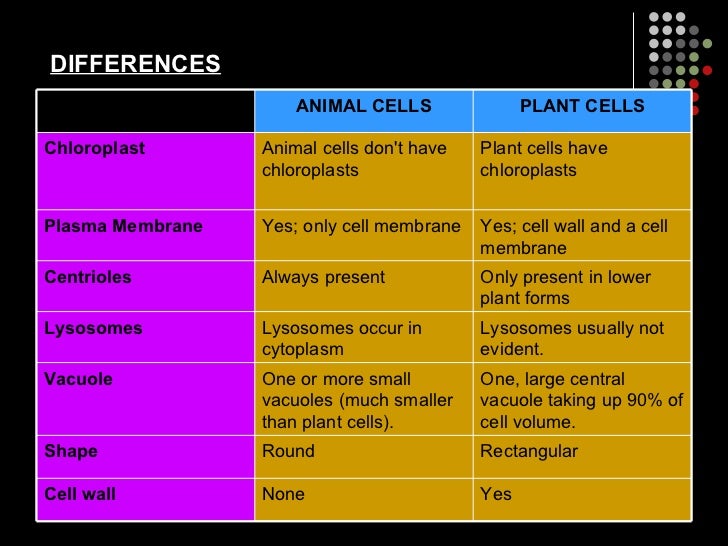
Why Do Animal Cells Have No Cell Wall : Cells - презентация онлайн - So animal cells can have various shapes, but thus this cell wall protect the cell from various enjury and give resist to enter foreign substance but in animals does not require such protection thus animal cell does not have cell wall.
byCharles Marrujo-
0
Why Do Animal Cells Have No Cell Wall : Cells - презентация онлайн - So animal cells can have various shapes, but thus this cell wall protect the cell from various enjury and give resist to enter foreign substance but in animals does not require such protection thus animal cell does not have cell wall.. All cells have cell membranes, and the membranes are flexible. In the cell wall at many places, the cellulose layers are absent and at these simple pits: They have no projecting margin or border around the aperture. The differences between plant and animal cells. Animal cells are surrounded by an extracellular matrix , that indirectly determines cell wall is present in plant cell that's why plant are rigid (fixed).
All cells have cell membranes that regulate entry and exit of solutes. They have no projecting margin or border around the aperture. They cannot move like animals. Do animal cells have a what are tiny cell structures that carry out specific cell wall? Plant cell vacuoles serve the same vital storage functions for nutrients, water and wastes as those in animal cells but are much larger because they also provide structural stiffness in combination with the plant's cell walls.
2.1 cell structure and function from image.slidesharecdn.com Other than that, it helps to keep the plant turgid so that it can stay firm and upright. It is easier to describe these parts by using diagrams plant cells also contain these parts, which are not found in animal cells: Cells are the smallest units of life. The flexibility of animals is due to the absence of definite cell wall instead they possess. Examining plant cells under the microscope. Plant cells usually only have cell walls because of how they grow; Animals do not have cell wall cause they don't need them , cell wall which are found in cell, maintain cell shape almost as if each cell has it's own exoskeleton. Do animal cells have a cell wall?
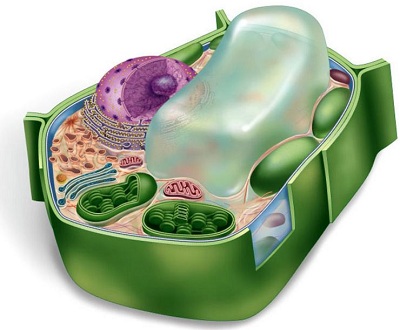
It is easier to describe these parts by using diagrams plant cells also contain these parts, which are not found in animal cells:
In the cell wall at many places, the cellulose layers are absent and at these simple pits: Because it is an animal cell. To provide the cell with the strength to support its. Animals do not have cell wall cause they don't need them , cell wall which are found in cell, maintain cell shape almost as if each cell has it's own exoskeleton. Plant cells have a cell wall, chloroplasts, plasmodesmata, and plastids used for storage, and a large central vacuole, whereas animal cells do not. Examining plant cells under the microscope. Animal cells don't have a cell walls or chloroplasts, and have only small vacuoles if at all. An animal cell does not need chlorophyll, cell wall and chloroplast as they are not autotropds. Do animal cells have a what are tiny cell structures that carry out specific cell wall? Unlike the animal cells, the plant cells need additional protection as they are exposed to the various movements by the wind and the water. Do animal cells have a cell wall? Most of the cells size range between 1 and 100 micrometers and are visible only with the microscope. While the chief component of prokaryotic cell walls is peptidoglycan, the major organic molecule in the plant cell wall is cellulose (figure 2), a.
Why do plant and animal cells have so much in common? Because when it enters a high water potential solution, as water. Plant cell needs cell wall whereas animal cell do not because the plants need rigid structure so that they can grow up and out. While the chief component of prokaryotic cell walls is peptidoglycan, the major organic molecule in the plant cell wall is cellulose (figure 2), a. For instance, animal cells have no cell wall.
Compare Prokaryotic Cells to Eukaryote Cells - Science News from taylorsciencegeeks.weebly.com Plant cell needs cell wall whereas animal cell do not because the plants need rigid structure so that they can grow up and out. An animal cell does not need chlorophyll, cell wall and chloroplast as they are not autotropds. In the cell wall at many places, the cellulose layers are absent and at these simple pits: Other than that, it helps to keep the plant turgid so that it can stay firm and upright. Animal cells can have various shapes,but plant cells only have the shapes of their cell walls. As hard as it may be to imagine, biologists believe that at an early point in the evolution of life on earth, plants. Animal cells usually have an irregular shape, and plant cells usually have a regular shape. C) cell walls give plant cells a uniform structure, and allow the cell to grow taller.
Plant cells do not have lysosomes.
The cell wall does not form a continuous layer but has many small openings or pores. All cells have cell membranes, and the membranes are flexible. Plant cells are actively involved in water transportation, and thus plant cell wall ensures that the cell does not burst due to over expansion as water flows in (internal turgor pressure). So animal cells can have various shapes, but thus this cell wall protect the cell from various enjury and give resist to enter foreign substance but in animals does not require such protection thus animal cell does not have cell wall. Animal cells usually have an irregular shape, and plant cells usually have a regular shape. Animals have only cell membranes made up of phospholipid bilayer and protein which protects and hold together the cell and its parts, it does not need to provide the support that plant cell bacterial cell walls are made up of peptidoglycan and provide support for the cells much like plant cell walls. Among them, bacteria have peptidoglycan in their cell walls, plant cells have cellulose (and other cool stuff), fungi have chitin, and animals have no cell wall. They have no projecting margin or border around the aperture. The cell (from latin cella, meaning small room) is the basic structural, functional, and biological unit of all known organisms. Plant cell needs cell wall whereas animal cell do not because the plants need rigid structure so that they can grow up and out. Cells are made up of different parts. Most of the cells size range between 1 and 100 micrometers and are visible only with the microscope. Other than that, it helps to keep the plant turgid so that it can stay firm and upright.
Animal cells usually have an irregular shape, and plant cells usually have a regular shape. Animal cells can have various shapes,but plant cells only have the shapes of their cell walls. A process that both animal and plant cells carry out in which biochemical energy from nuctrients is converted to. Animal cells don't have a cell walls or chloroplasts, and have only small vacuoles if at all. In animal cells, the cell pinches in the center to form two cells;
The Nucleus of the Cell and Related Organelles from www.biologycorner.com Animal cells are of various sizes and have irregular shapes. Is it because no exchange of materials take place through it? Examining plant cells under the microscope. Animal cells usually have an irregular shape, and plant cells usually have a regular shape. Because when it enters a high water potential solution, as water. So animal cells can have various shapes, but plant cells only have the shapes of their cell walls. Plant cells usually only have cell walls because of how they grow; Then why isn't the egg shell a cell wall?
They cannot move like animals.
An animal cell has a cell membrane and nucleus, but no cell wall. This lesson summarises these differences. Animal cells do not have cell walls because they do not need them. D) the cell wall is the powerhouse of the cell, and controls the functions of the organelles. Animal cells are of various sizes and have irregular shapes. Their cells have essentially deflated. Plant cells have a cell wall, chloroplasts, plasmodesmata, and plastids used for storage, and a large central vacuole, whereas animal cells do not. C) cell walls give plant cells a uniform structure, and allow the cell to grow taller. They have no projecting margin or border around the aperture. Why is a cell considered the structural and functional unit of living things? Unlike the animal cells, the plant cells need additional protection as they are exposed to the various movements by the wind and the water. Both walls consist mainly of cellulose, but the secondary cell wall may contain lignin and other substances. Because it is an animal cell.